


The email is short and polite. “We’ve decided to take things in a different direction. Thanks for everything.” And just like that, a client you were sure was happy is gone.
Most agency owners assume the reason was money. A cheaper competitor, a budget cut, a new boss. Sometimes that’s true. But the research tells a different, more useful story: most clients leave for reasons you can see coming, and fix, long before that email arrives.
In this article
The numbers behind client churn
Here’s what four recent studies say about why, and how fast, agencies lose clients:
1 to 2 yrs
is how long the average agency client relationship lasts (12 to 24 months)
And keeping clients matters more than most owners realise. Bain’s Fred Reichheld found that in financial services, a 5% increase in customer retention produced more than a 25% increase in profit. Agencies aren’t banks, but the logic carries over: a client who stays a second year costs you far less to serve than a new one costs to win.
The perception gap: clients and agencies disagree
When Setup surveyed more than 400 brand and agency professionals for its Marketing Relationship Survey, it asked both sides the same question: why do agency relationships end?
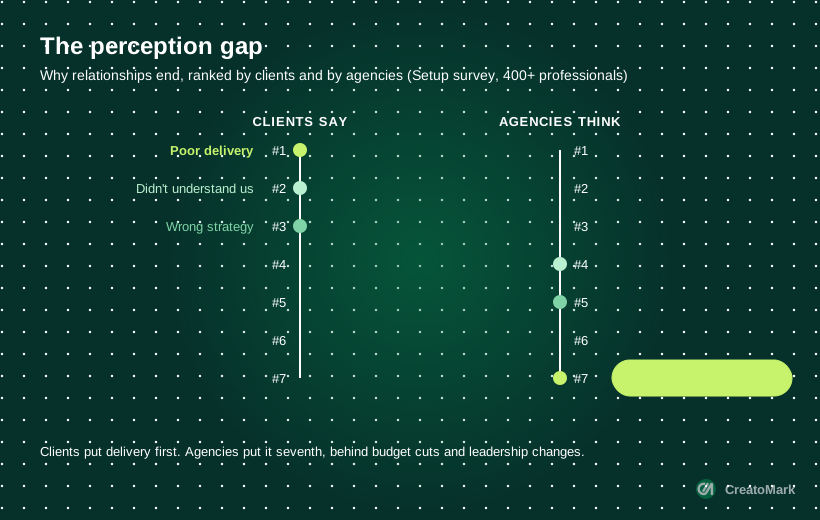
Clients put dissatisfaction with delivery at number one, cited by 48% of them and up 14 points in a year. Agencies ranked the same reason seventh. They blamed budget cuts and new leadership instead.
Clients don’t leave because they can’t afford you. They leave because they stopped being sure you’re worth it.
That’s actually good news. Budget cuts and new bosses are out of your control. Delivery, understanding and communication are not.
The six real reasons clients leave
Combine the survey rankings with what agency owners tell us every week, and six patterns stand out:
Deadlines move, small requests take days and quality varies from month to month. The number one reason clients give.
The agency knows the tasks but not the business: the customers, the margins, the goals behind the work.
The agency only reacts to requests. Nobody brings an idea the client didn’t ask for.
Reports list activity, not outcomes. The client can’t explain to their boss what they’re paying for.
Updates get rare, replies get slow, and silence starts to feel like a problem even when there isn’t one.
Tools promise to do part of the job, so the client starts asking which parts they still need you for.
Watch out for “soft churn”
That last card deserves its own warning. According to Focus Digital, 60% of senior marketing leaders have reduced agency spend because of AI. Many don’t fire the agency. They quietly trim the retainer by 20 to 30%, one scope reduction at a time. If your revenue per client is shrinking while your client count stays the same, this is probably why.
Early warning signs, and what to do this week
Warning signs
What to do
Why retainers keep clients longer
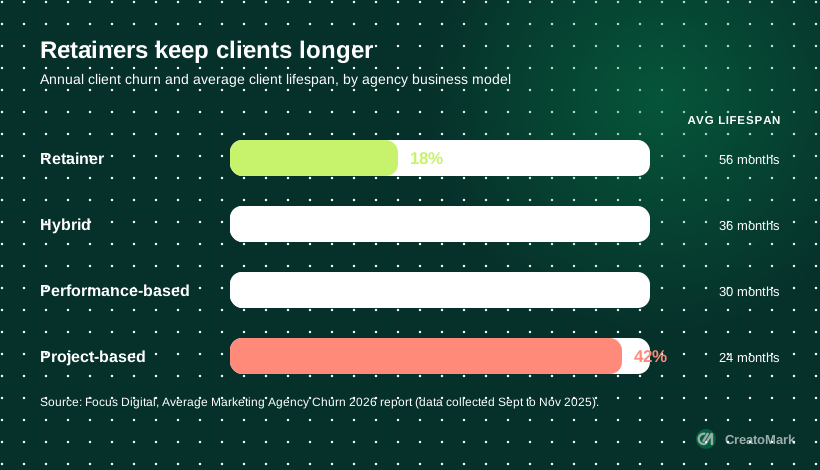
The business model itself changes how long clients stay. Focus Digital’s data shows retainer clients stay an average of 56 months, while project clients stay just 24. A retainer creates a rhythm: regular contact, regular results and a natural moment to plan what’s next.
If most of your income still comes from one-off projects, our guide on turning websites into monthly retainers walks through how to make the switch, starting with website care plans.
The retention playbook
Six habits that tackle every reason on the list above. None of them needs new software.
01
Fix delivery first
Set clear turnaround times, keep promises small and keep them every time. Nothing else on this list works if delivery slips.
02
Start with business goals
At kickoff, ask what success looks like for their business, not just which tasks they need. Write it down and refer back to it.
03
Report outcomes, not activity
Lead every report with results: leads, sales, rankings, time saved. Activity goes at the bottom, if at all.
04
Review every quarter
A 30-minute review of what worked, what didn’t and what’s next. It’s the single best moment to renew and grow the account.
05
Bring one idea a month
A small, specific suggestion they didn’t ask for. It’s the easiest way to stop being “just a supplier”.
06
Make change easy
When the client needs something new, say yes fast. Clients leave agencies that can’t keep up with them.

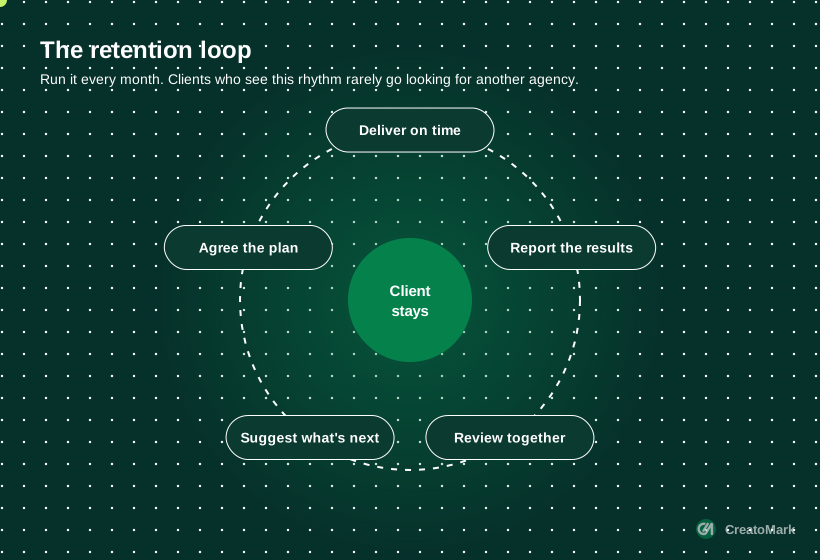
The monthly rhythm that keeps clients
| When | What | Why it matters |
|---|---|---|
| Weekly | A short written update: done, in progress, needs your input | Silence is what makes clients nervous |
| Monthly | An outcome report with one clear headline number | Makes your value easy to explain upwards |
| Quarterly | A review call with a plan for the next 90 days | The natural moment to renew and grow scope |
| Yearly | A “year in results” summary and goals for next year | Turns a supplier into a long-term partner |
CallRail’s survey of 100 US agencies found that agencies that weren’t using analytics to prove ROI had the shortest client relationships. The monthly report isn’t paperwork. It’s retention.
When the real problem is capacity
Here’s an uncomfortable truth. When delivery slips, it’s rarely because the team doesn’t care. It’s because the team is stretched. Too many clients, too few people, and every new project makes it worse.
That’s exactly the gap a white-label partner fills. You keep the client relationship and the strategy. A partner team handles production behind your brand, with clear reply times by plan and a senior review on every deliverable. Delivery stops slipping, and your team gets its time back for the things clients value most: ideas, communication and results.
Is delivery capacity holding your agency back? Book a growth call and we’ll look at where a partner could take pressure off, or compare plans on our pricing table. New to white-label? Start with the 12 questions to ask a partner.
Your client retention checklist
Run this on every client this month
The bottom line
Clients rarely leave over price. They leave when delivery slips, when they feel misunderstood and when they can’t see what they’re getting. All three are fixable, and all three show warning signs long before the goodbye email.
Fix delivery, prove your value every month and bring ideas they didn’t ask for. Do that consistently, and you’ll stop losing clients you thought were happy.