


If one of your clients sells online to customers in the EU, there’s a good chance their website now has a legal duty to be accessible. Many of them don’t know it yet.
The European Accessibility Act (EAA) started applying on 28 June 2025. It’s one of the biggest accessibility laws to reach everyday websites and online shops, and it gives agencies a clear, timely service to offer: find the problems, fix them, and keep them fixed.
Please note: this article explains the basics for agencies. It isn’t legal advice. Each EU country enforces the EAA through its own national law, so clients with specific legal questions should speak to a lawyer.
In this article
The EAA in plain English
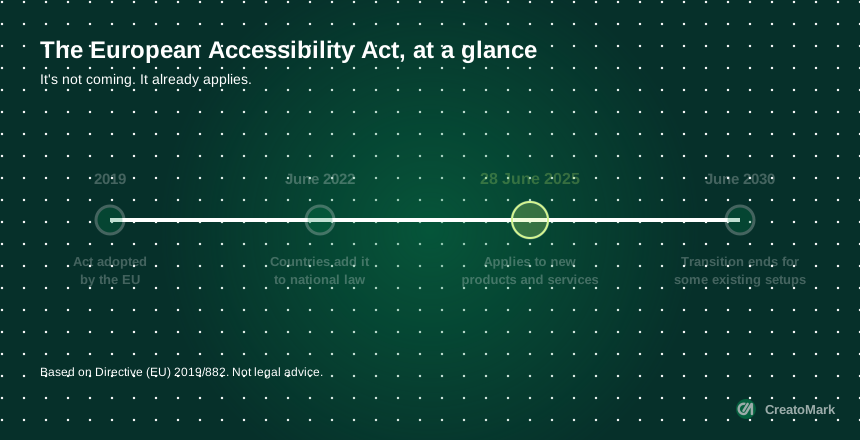
The EAA is an EU directive, Directive (EU) 2019/882, that sets common accessibility rules for key products and services. EU countries had to turn it into national law by June 2022, and as law firm Reed Smith summarises, from 28 June 2025 new consumer-focused products and services offered in the EU must be accessible.
The European Commission lists the services it covers, including:
Online shops and other ways of selling products or services to consumers online.
Online banking and other consumer banking services.
Air, bus, rail and waterborne transport services, including websites and apps.
E-books, electronic communications and access to audiovisual media services.
Who is exempt?
The directive exempts microenterprises that provide services: businesses with fewer than 10 employees and an annual turnover or balance sheet of €2 million or less. That exemption doesn’t apply the same way to products, and businesses outside the EU that sell to EU consumers can still be covered. When in doubt, the client should check with a lawyer.
What does “accessible” mean in practice?
For websites, the work lines up closely with the Web Content Accessibility Guidelines (WCAG), the international standard most audits use. In everyday terms: people using screen readers, keyboards, magnifiers or captions must be able to find information, fill in forms and complete a purchase.
Most websites aren’t ready
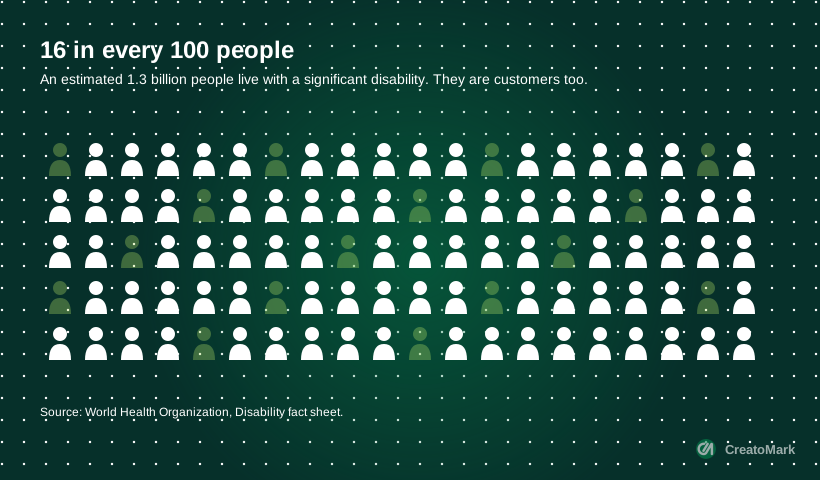
1.3 billion
people, about 16% of the world, live with a significant disability
2,019
US website and app accessibility lawsuits in the first half of 2025 alone
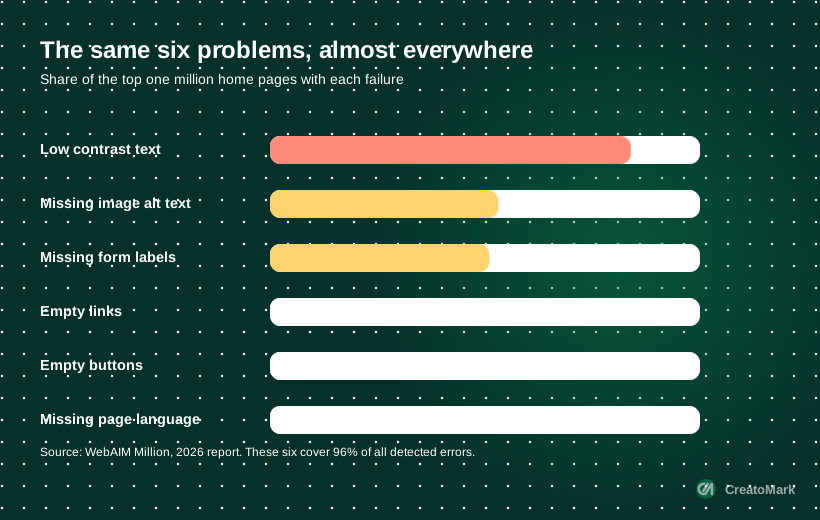
The good news hides in that chart. The WebAIM Million found that just six types of problem account for 96% of all errors it detected, and most of them are quick to fix once you know where they are: text contrast, image descriptions, form labels, link and button text, and the page language.
And this isn’t only a European issue. In the US, UsableNet counted 2,019 digital accessibility lawsuits in the first half of 2025 and expected a 20% rise on 2024. For clients selling internationally, accessibility is quickly becoming a basic expectation.
The service agencies can offer
01
Audit
Automated scans plus manual checks of key journeys: home page, navigation, a product page, the cart and checkout, and contact forms.
02
Prioritise
A clear report that ranks issues by impact, starting with anything that stops someone from buying or getting in touch.
03
Fix
Contrast, alt text, labels, keyboard access, focus states, headings, captions. Most fixes are design and template changes.
04
Monitor
Monthly scans and checks of new pages, so new content and updates don’t quietly break accessibility again.

Quick wins vs deeper work
Deeper work
Quick wins
Avoid “one-line fix” overlays. Plugins that promise instant compliance with a single script don’t fix the underlying code, and many accessibility experts advise against relying on them. Real fixes live in the theme, the templates and the content.
How to package and price it
| Package | What’s included | Good for |
|---|---|---|
| Accessibility audit | Automated scan, manual checks of key journeys, prioritised report | Every client selling to the EU |
| Fix sprint | Fix the high-impact issues found in the audit, then re-test | Clients who need to act now |
| Accessibility care | Monthly monitoring, checks on new pages and a short report | Ongoing protection, ideal with a care plan |
| Statement support | Help drafting an accessibility statement and a feedback route | Clients who want to show their commitment |
Example packages. Set your own prices based on site size, platform and your delivery costs.
Accessibility care fits naturally inside a website care plan, and it’s a strong reason for a one-off client to move onto a monthly retainer, as we describe in From One-Off Projects to Monthly Revenue.
How to talk to clients about it
Don’t
Do
“Your site may be turning some customers away without you knowing. Let’s check it, fix what matters most, and keep it that way.”
Deliver it under your brand
Accessibility work sits right between design and development, which is why our web design and UX audit and WordPress development teams handle it together, white-label, with ongoing checks through our care plans.
Have clients selling to EU customers? Book a growth call and we’ll help you put together an accessibility offer, or compare plans on our pricing table.
Quick accessibility check for any client site
The bottom line
The European Accessibility Act has turned accessibility from a nice-to-have into a requirement for many businesses selling online in the EU. Most websites aren’t ready, and most of the fixes are well within an agency’s skills.
Lead with customers, start with an audit, fix what matters most and keep it monitored. It’s good for your clients, good for their customers and a valuable, long-term service for your agency.