


You’ve just signed two new clients. Your team is already full, your inbox is overflowing, and three people have told you three different things: “hire a developer”, “find a partner”, “AI can do half of this now”.
They can all be right, for different pieces of work. The mistake is treating it as one big decision. This guide breaks it into a simple three-question test you can run on any task, with the real costs and timelines behind each option.
In this article
Three ways to add capacity
A new person on your team. The most control and the deepest knowledge of your clients, at a fixed cost that stays when work slows down.
A partner or specialist does the work. A variable cost you pay when there is work, with skills you don’t need every week.
Software does the repeatable steps. Cheap to run once it works, but only for tasks with clear rules.
Most growing agencies need all three. The question is which work goes where.
The three-question test
01
Is it repeatable, with clear rules?
Moving form entries into your CRM, sending invoice reminders, creating project folders. If a checklist could describe it, automate it first.
02
Is there enough steady work to fill a role?
Look at the last six months, not the last busy week. If the work comes in waves, a full-time hire will sit idle between them.
03
Is it core to what clients buy from you?
Strategy, client relationships and your signature skill belong in-house. Delivery that supports them can be outsourced.
Most tasks split. A website project might mean automating the setup, outsourcing the build and keeping the strategy and client calls in-house. Run the test on each part, not on the whole project.
When to hire
Hire when the work is steady, it’s central to what clients pay you for, and you want the knowledge to stay inside your business. But go in knowing the full cost and the time it takes.
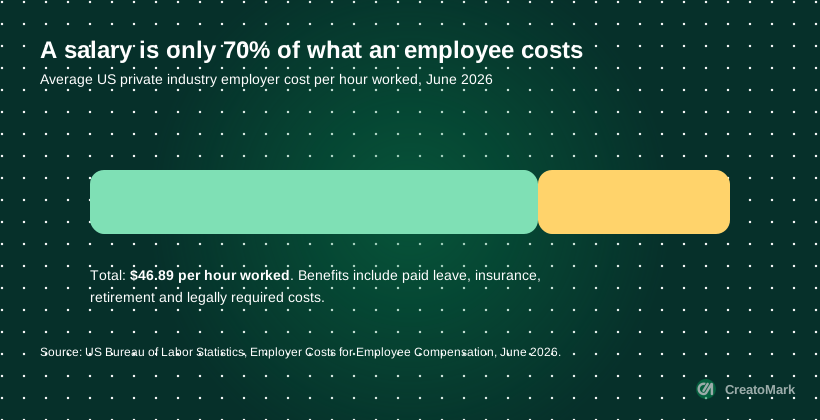
The US Bureau of Labor Statistics reports that in June 2026, private employers paid an average of $46.89 per hour worked. Only $32.82 of that, 70%, was wages. The other 30% was benefits: paid leave, insurance, retirement and legally required costs. Then add equipment, software seats, training and management time.
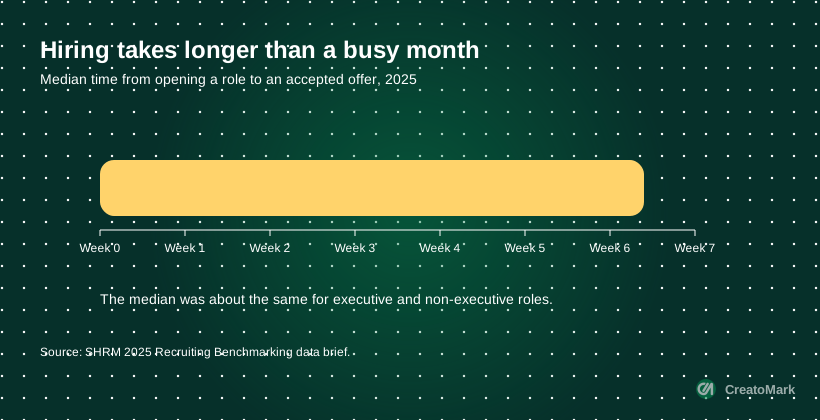
Time matters as much as money. SHRM’s 2025 benchmarking data puts the median time to fill a role at about a month and a half, from opening the job to an accepted offer. Notice periods and onboarding come on top of that.
And getting it wrong is expensive. Gallup estimates that replacing an employee costs between one-half and two times their annual salary, and calls that a conservative estimate.

Signs you’re not ready to hire
Signs it’s time to hire
Our breakdown of white-label vs hiring runs the full numbers for a developer, line by line.
When to outsource
Outsource when the work comes in waves, needs skills you only use sometimes, or simply needs more hands than you have this quarter. You pay for delivery when there is delivery to do.
Larger companies are thinking the same way. Deloitte’s 2024 Global Outsourcing Survey of more than 500 executives found that skilled talent and agility have joined cost reduction as the key reasons to outsource, and that 83% of them are already using AI within their outsourced services.
Website builds, landing pages and updates that spike around launches and campaigns.
Technical SEO, migrations, accessibility or custom development you need a few times a year.
Care plans and updates that need doing reliably every month, but not by you.
Outsourcing only works with a partner you can trust with your clients. Our checklist on how to choose a white-label partner covers the 12 questions to ask first.
When to automate
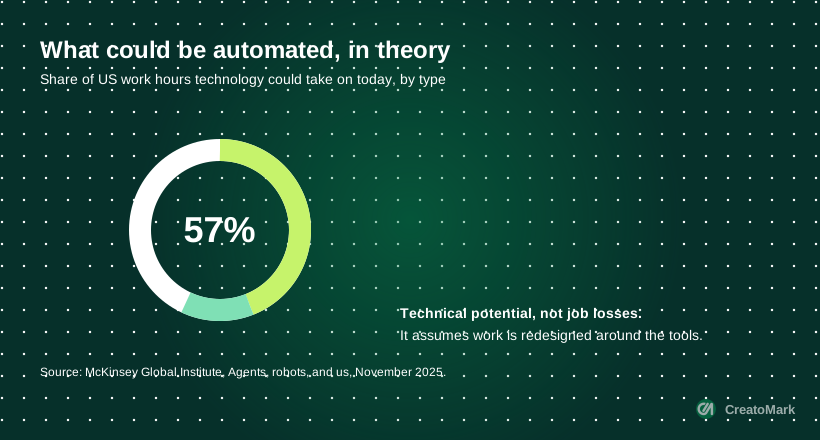
The McKinsey Global Institute estimated in November 2025 that technologies already demonstrated could, in theory, automate activities making up about 57% of US work hours: 44% through AI agents and 13% through robots. It stresses that this is technical potential, not a forecast of job losses, and that capturing it means redesigning how work is done.
For an agency, the best first candidates are small, repeatable tasks around delivery, usually connected with tools like Zapier or Make:
| Task | Automate? | Keep a human for |
|---|---|---|
| New client onboarding forms and folders | Yes | The welcome call |
| Invoice reminders | Yes | Conversations about overdue accounts |
| Monthly report data collection | Yes | The insights and recommendations |
| First drafts of routine content | Partly | Editing, accuracy and brand voice |
| Client strategy and feedback | No | All of it |
Automate the process, not the relationship. Clients rarely notice a smoother invoice. They always notice when a real conversation turns into an automated one. We cover where AI really helps in how agencies can use AI to deliver faster.
Side by side
| Hire | Outsource | Automate | |
|---|---|---|---|
| Cost type | Fixed, every month | Variable, per project or plan | Low running cost after setup |
| Time to start | About 6 weeks to an offer, plus notice | Days to weeks, after a test project | Hours to weeks, depending on the task |
| Flexibility | Low | High | High, within clear rules |
| Control | Highest | Shared, set by the brief | Full, but only for the rules you set |
| Best for | Steady, core work | Waves, specialist skills, overflow | Repeatable admin and data tasks |
Mistakes to avoid
A busy quarter feels permanent. Check six months of data before adding a fixed cost.
A partner can only match your quality if your standards are written down.
Automation makes a messy process faster, not better. Fix the steps first.
Run a 30-minute capacity review
Before you add capacity
Then check the result in your weekly numbers. Our guide to the 7 numbers to check every week shows how utilization and margin change as you add capacity, and finding the leaks in your margin shows where it tends to go.
Where CreatoMark fits
We built CreatoMark for the middle branch of that decision tree. As a white-label partner, our own team delivers WordPress development, website care plans and AI automation and chatbots under your brand, so you can say yes to new work without hiring for every peak. It’s the model we describe in scaling your agency without burning out.
Not sure which branch your work belongs on? Book a growth call and we’ll run the three questions together, or compare plans on our pricing table.
The bottom line
Hiring, outsourcing and automating aren’t competing strategies. They’re tools for different kinds of work. Automate what follows rules, outsource what comes in waves or needs rare skills, and hire for the steady work at the heart of what clients buy from you.
Ask the three questions every time work starts piling up, and you’ll add capacity without adding costs you can’t carry.