


Your costs went up. Your team got better. Your results got stronger. And your prices? Probably the same as two years ago, because raising them feels risky right now, with every client asking whether AI could do the job for less.
Here’s the surprising part: most agencies aren’t cutting prices. They’re raising them, or holding firm. The ones doing it well have one thing in common, and it isn’t working harder or using more AI. Let’s look at what the data says and how to do it without losing the clients you want to keep.
In this article
What agencies are really doing
Convert’s 2026 agency research adds a detail that should change how you think about this: they tested five measures of how heavily agencies use AI against price changes, and none of them tracked price. Using more AI didn’t let agencies charge more. Moving to higher-value work did.
Why a small rise matters so much
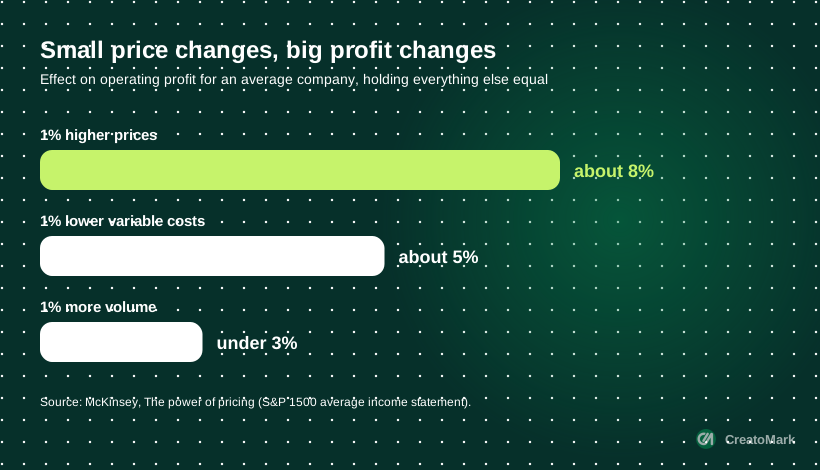
McKinsey’s classic analysis, The power of pricing, found that for an average company a 1% price increase, with volume unchanged, lifts operating profit by about 8%. That’s roughly 50% more impact than cutting variable costs by 1%, and more than three times the impact of selling 1% more.
For an agency with thin margins, a modest price rise can be the difference between a stretched year and a healthy one, without a single new client.
First, know when you’ve earned it
Signs you can raise your prices
If you tick fewer than three, fix the value story first. Our guide on proving your agency’s value every month is the best place to start, because a price rise without visible results is a scope cut waiting to happen.
Three ways to raise your prices
Put new prices on every new proposal. No awkward conversations, and you learn what the market accepts.
Swap routine tasks for higher-value outcomes: strategy, conversion work, AI setup and review. A new package is easier to price higher. AI search visibility is a good example.
An annual increase for current clients, backed by results and with plenty of notice.
Most agencies should do all three, in that order. Start with new clients, then repackage, and only then raise existing retainers. Watch for soft churn as you do.
Repackaging: the move that works best
This is where the 72% figure comes from. Agencies that raised prices mostly did it by changing what they sell, not just the number on the invoice.
Old package
New package
AI makes this easier, not harder. If AI speeds up the routine parts, you can include more strategy and review in the same price, and position the package around results. We cover the conversation in detail in Your Client Says “We’ll Just Use AI Now.”.
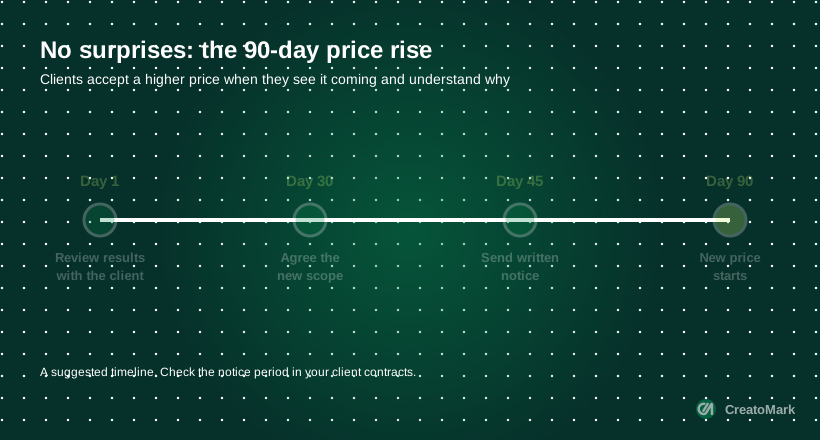
The 90-day price rise plan
01
Review results first
Start with a results review, not a price talk. Remind the client what changed for their business this year.
02
Agree the new scope
Show what’s included going forward, especially anything new or upgraded.
03
Send written notice
A short, friendly letter or email with the new price and the start date. Give at least 30 to 60 days, or what your contract says.
04
Start on the date
Apply it as planned. Don’t quietly delay it, or it will never stick.
What to say
Keep it short, confident and focused on the client. Here’s an example you can adapt:
“This year we grew your organic leads by 31% and moved your site to faster hosting with no downtime. From April, our monthly plan will be $X, which also adds quarterly conversion testing. I wanted to give you plenty of notice, and I’m happy to walk through it on a call.”
Avoid
Do

If a client pushes back
| They say | You can offer |
|---|---|
| “Our budget is fixed this year.” | A smaller package at the new rate, so scope fits the budget instead of the price dropping |
| “AI can do some of this now.” | Move the routine work to their AI tools, and keep you for review, strategy and results |
| “Can we keep the old price?” | A longer commitment in return for a smaller increase |
| “We’ll need to think about it.” | A results review call before the new price starts |
Budgets are tight everywhere. Gartner’s 2025 CMO Spend Survey found marketing budgets flat at 7.7% of company revenue. That’s why repackaging works better than a straight increase: it gives clients a way to say yes.
Losing a few low-margin clients isn’t failure. If a client only stays because you’re cheap, a price rise frees up time for clients who value your work.
Protect your margins on the delivery side
Raising prices is one half of profit. The other is delivering efficiently. When your team is stretched, every new client lowers your margin. A white-label partner gives you predictable delivery costs on a flat monthly plan, so higher prices turn into higher profit instead of more overtime. Compare the economics in White-Label vs Hiring.
Planning a price rise or a new package? Book a growth call and we’ll help you shape an offer you can deliver profitably, or see our plans on the pricing table.
The bottom line
AI hasn’t made agency work worth less. It has made routine work worth less, and strategy, quality and results worth more. The agencies raising prices are the ones selling the second list.
Start with new clients, repackage around outcomes, give existing clients plenty of notice, and lead every conversation with results. Your next price rise doesn’t need to be a risk.